
By Gregory Cassius | Spare Time Profit
Why Emergency Preparedness Matters to Me
As a retired U.S. Army Aviation specialist who spends part of the year in St. Croix, U.S. Virgin Islands, and part in Virginia, I’ve come to appreciate the importance of being prepared for unexpected situations.
St. Croix is a beautiful island with wonderful beaches, friendly communities, and a rich history. But like many Caribbean islands, it also faces challenges involving hurricanes, power outages, and the availability of essential supplies.
One issue that has concerned me for years is the reliability of electricity on St. Croix. Residents have dealt with problems involving the Virgin Islands Water and Power Authority (WAPA), and dependable electrical service remains an important concern.
Although my perspective comes partly from St. Croix, emergency preparedness is something everyone should take seriously, whether you live in the Caribbean, Virginia, Florida, Texas, or anywhere else.
1. Don’t Wait Until an Emergency to Prepare
One mistake people can make is waiting until a storm is approaching before buying supplies.
By that time, stores may be crowded, popular products may be unavailable, and transportation can become difficult.
I believe every household should maintain a basic emergency supply kit throughout the year.
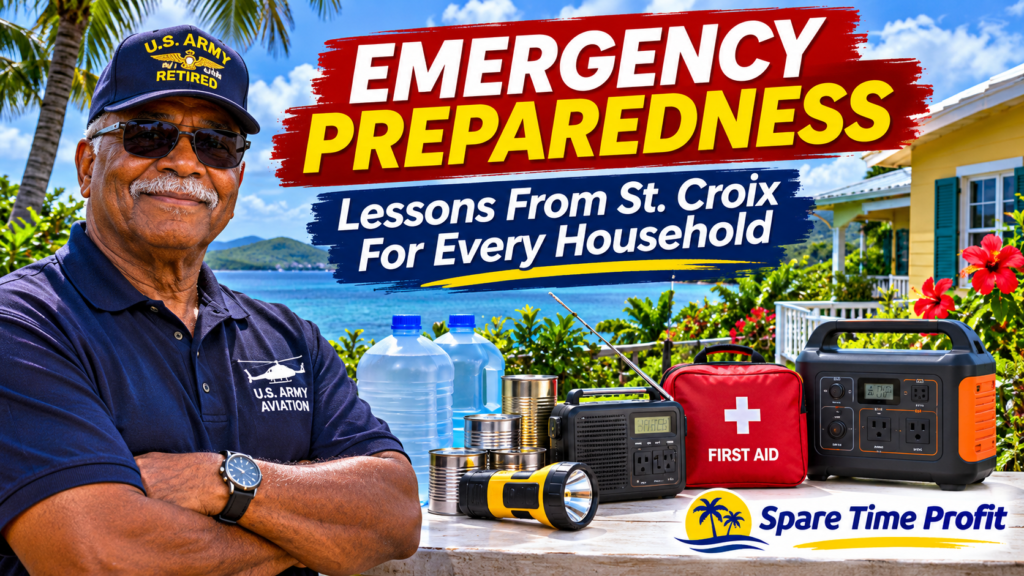
That kit should include:
- Drinking water and nonperishable food
- Flashlights and extra batteries
- A battery-powered or hand-crank weather radio
- First-aid supplies and necessary medications
- Personal hygiene products
- Important documents stored in waterproof protection
- Phone charging equipment
- Supplies for children, older adults, and pets where needed
A useful starting point is enough supplies for at least three days. Households in locations that may be isolated after a major storm should consider a longer supply period.
2. Emergency Power Should Be Part of Every Household’s Plan
Electricity affects nearly everything we do.
Without power, refrigerators stop working, communication becomes difficult, and medical equipment may be affected.
For someone operating an online business, a power outage can also interrupt access to customers, email, websites, and affiliate accounts.
This is why I believe emergency power deserves serious consideration.
Depending on household needs and budget, possible solutions include portable battery power stations, solar panels with compatible battery storage, and properly installed standby generators.
Gasoline and propane generators can also be useful, but safety must always come first.
Never operate a fuel-powered generator inside a home, garage, or enclosed area. Keep it outdoors, at least 20 feet from doors, windows, and vents, with exhaust directed away from the building. Install working carbon monoxide detectors and follow the manufacturer’s instructions.
A battery power station is different from a fuel-powered generator, but it still needs to be used according to its electrical and ventilation requirements.
No single system is right for everyone. Before purchasing emergency power equipment, calculate what you actually need to operate and for how long.
3. Water and Food Are Just as Important as Electricity
Emergency power gets considerable attention, but safe drinking water and food should come first.
A practical guideline is to store at least one gallon of drinking and sanitation water per person per day, with additional supplies for hot weather, medical needs, and pets.
Choose shelf-stable foods your family already eats. Rotate supplies before expiration dates and keep a manual can opener available.
For households in hurricane-prone locations, it may be wise to prepare for extended disruptions to transportation and deliveries.
Emergency supplies should be practical, affordable, and suitable for your household—not purchased simply because an advertisement makes them sound essential.
4. Communication and Family Planning
A good emergency plan should answer some basic questions.
Where will family members meet if communication systems fail? Who should everyone contact? Where are the nearest shelters? How will you receive official weather warnings?
Keep emergency contact information written on paper as well as stored on your phone.
If evacuation becomes necessary, follow instructions from local emergency management authorities. Never assume that remaining at home is the safest option.
For St. Croix residents, official information from the Virgin Islands Territorial Emergency Management Agency (VITEMA) is especially important.
Residents elsewhere should follow their own local emergency management offices and the National Weather Service.
5. Protecting Your Home and Important Records
Preparedness also means reducing avoidable damage.
Before storm season, inspect windows, doors, roofing, drainage, and outdoor items that could become dangerous in high winds.
Keep copies of important records, including identification, insurance information, property documents, and medical contacts, in secure waterproof storage.
Digital copies can be helpful, provided they are protected by strong passwords and accessible when needed.
Review insurance coverage before an emergency rather than after damage occurs.
6. Keeping an Online Business Running During an Emergency
Because SpareTimeProfit.com focuses on affiliate marketing and earning income in your spare time, I also want to address business continuity.
A small online business can benefit from a simple emergency plan.
For example, I use WordPress for my blog and Aweber for email marketing. These tools can help organize publishing and follow-up, but they do not eliminate every interruption.
If my internet or electricity becomes unavailable, I still need to know how to regain access to important accounts.
I recommend keeping secure backups, protecting account credentials, enabling two-factor authentication, and maintaining access to recovery information.
Where practical, a backup internet connection and a charged battery power station may help during shorter outages.
Affiliate marketing offers flexibility, but it is not immune to emergencies.
7. Choosing Emergency Products Carefully
Emergency preparedness is also an area where affiliate marketers can provide useful information.
Products such as emergency food supplies, water filtration equipment, power stations, flashlights, and radios may be relevant to readers.
However, I believe recommendations should begin with the reader’s actual needs—not the commission an affiliate might earn.
Before recommending any product, I would consider its price, specifications, safety instructions, warranty, customer support, and suitability for the intended use.
I also believe it is important to disclose affiliate relationships clearly.
If I recommend a product through an affiliate link, I may earn a commission when someone makes a qualifying purchase, at no additional cost attributable to the commission. That possibility should never replace careful research.
8. What St. Croix Can Teach the Rest of Us
St. Croix’s experience reminds me that beautiful surroundings do not guarantee reliable infrastructure.
A household can live in a wonderful location and still face difficulties when electricity, water, communications, or transportation are interrupted.
Preparedness should not be based on fear. It should be based on responsibility, planning, and understanding the risks where we live.
I would also like to see continued attention to stronger infrastructure, dependable electricity, and practical emergency planning throughout the U.S. Virgin Islands.
Those improvements would benefit residents, businesses, visitors, and the territory’s long-term future.
Final Thoughts: Preparation Gives Us More Options
Retirement should be a time to enjoy life, family, travel, and personal interests.
But enjoying retirement also means taking reasonable steps to protect what matters.
Whether you live on St. Croix, along the Atlantic coast, or somewhere far from the Caribbean, I encourage you to review your household’s emergency plan.
Start with the essentials. Make improvements as your budget allows. Don’t wait for the next storm warning to begin.
At Spare Time Profit, my goal is to share practical experiences, useful information, and opportunities worth exploring—while remembering that financial freedom and peace of mind both require thoughtful decisions.
Helpful official resources:
- Ready.gov — Emergency preparedness guidance
- National Hurricane Center — Hurricane forecasts and advisories
- VITEMA — U.S. Virgin Islands emergency management
- CDC Generator Safety — Carbon monoxide prevention
Affiliate disclosure: Some future product recommendations on this website may contain affiliate links. When an affiliate link is used, I may earn a commission from qualifying purchases. I recommend evaluating products based on your needs and budget.