
Could Hackers Really Disrupt America’s Food Supply?
When I recently received a message asking whether hackers could shut down our food supply, it caught my attention.
As a retired U.S. Army Aviation specialist and Department of Defense retiree, I believe preparation and planning are important. I’ve also spent years watching the challenges residents face on my home island of St. Croix, U.S. Virgin Islands, where power outages and disruptions to essential services remain concerns.
But this issue is much bigger than St. Croix.
What would happen if a major cyberattack interrupted grocery deliveries, food processing plants, warehouses, or transportation systems across parts of the United States?
Would our local supermarkets continue receiving food? Would families have enough supplies to manage until normal operations resumed?
I decided to look beyond the advertising headlines and examine what has actually happened.
1. America’s Food Supply Has Already Experienced Cyberattacks
Cyberattacks against food businesses are not imaginary.
In 2021, ransomware disrupted JBS, one of the world’s largest meat processors.
In 2023, Dole experienced a cyberattack that interrupted production and food distribution.
In June 2025, United Natural Foods reported a cyberattack that affected its ability to fulfill and distribute grocery orders.
And in 2026, Fairlife temporarily suspended production at its U.S. facilities after attackers gained access to parts of its computer systems.
The U.S. Government Accountability Office’s November 2026 report identified cybersecurity weaknesses and recommended further federal action to protect the food and agriculture sector.
These incidents should concern us.
However, I want to make one thing clear: Disrupting parts of the food supply chain is not the same as shutting down every grocery store in America.
We should prepare for realistic disruptions, not assume the worst possible outcome is inevitable.
2. Why Grocery Stores Depend on More Than Food
When most people visit a supermarket, they see shelves filled with groceries.
What we don’t always see is the complicated network required to keep those shelves stocked.
Food moves through farms, processing facilities, refrigerated warehouses, transportation companies, distribution centers, and retail stores.
Many of these operations depend on computers, communications systems, electricity, and electronic inventory management.
If one important part of that network experiences a serious interruption, deliveries may be delayed.
A cyberattack is one possible cause. Hurricanes, floods, transportation problems, and extended power outages can also interfere with supplies.
That is why I believe every household should have a reasonable backup plan.
3. Keep an Emergency Food Supply at Home
My first recommendation is simple.
Don’t wait until an emergency to begin purchasing basic food supplies.
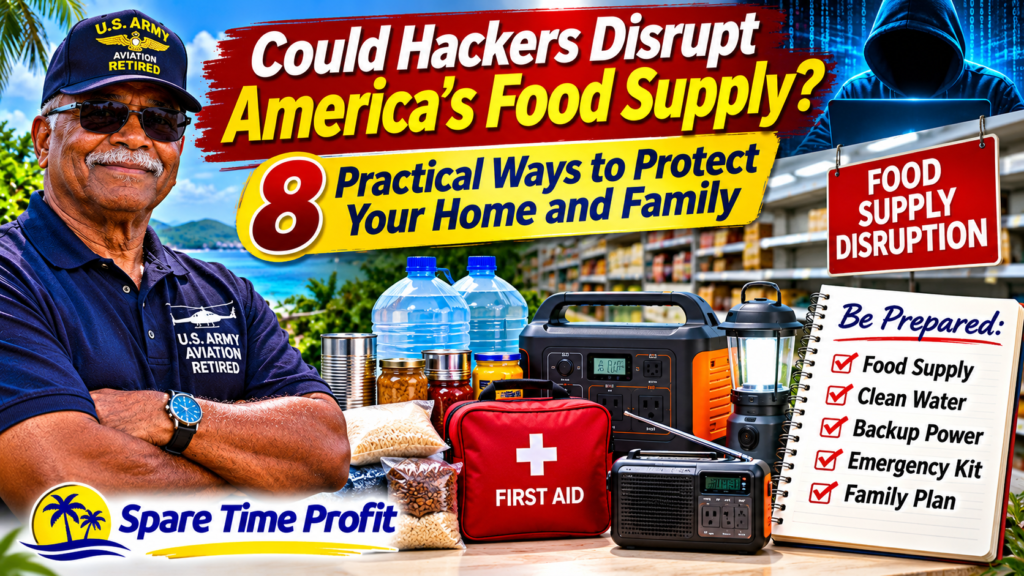
Start with foods your household already eats, including canned vegetables, canned meat or fish, beans, rice, pasta, peanut butter, crackers, and other shelf-stable products.
Choose items that can be prepared with little or no cooking when possible.
The federal government recommends keeping at least a three-day supply of nonperishable food. Depending on your location and circumstances, building toward a longer supply may be sensible.
You don’t have to purchase everything at once.
Adding a few extra items during regular grocery shopping can help build a useful reserve over time.
Remember to rotate your supplies and check expiration dates.
4. Store Safe Drinking Water
Food is important, but safe drinking water is even more essential.
The Centers for Disease Control and Prevention recommends storing at least one gallon of water per person per day for three days and trying to maintain a two-week supply when possible.
Hot weather, medical needs, and pets may increase that requirement.
For residents of St. Croix and other Caribbean islands, I believe additional water planning is particularly worthwhile.
Store water properly, protect it from contamination, and understand how to obtain official guidance if your normal water supply becomes unsafe.
5. Prepare for Power Outages
A disruption to electricity can quickly affect food storage and preparation.
Without refrigeration, perishable foods may become unsafe.
A backup battery system or properly installed generator may help with selected household needs, but every option has limitations.
Before buying equipment, consider the appliances you actually need to operate, the required wattage, battery capacity, fuel availability, and total cost.
Never operate a gasoline or propane generator inside a home or garage. Follow established generator safety instructions to prevent carbon monoxide poisoning.
Also keep flashlights, charging equipment, and a battery-powered radio available.
6. Create a Family Emergency Plan
Preparedness involves more than buying supplies.
Families should know how to communicate if phone or internet services become unavailable.
Keep important phone numbers written down.
Discuss how to check on older relatives, neighbors, and people who may need assistance.
Store necessary medications, first-aid supplies, personal hygiene products, and essential documents where they can be accessed quickly.
If an emergency requires evacuation, follow instructions from local authorities.
A simple written plan can make a difficult situation more manageable.
7. Don’t Let Fear Make Your Purchasing Decisions
This is especially important when considering emergency preparedness products advertised online.
An advertisement may describe a frightening situation and then encourage you to buy immediately.
But fear alone is not a good reason to purchase an expensive emergency food package or backup power system.
I recommend comparing the actual contents, number of servings, calories, nutritional information, shelf life, storage requirements, shipping costs, and return policies.
A product advertised as providing a certain number of days of food may not meet every person’s nutritional needs.
Consider ordinary grocery-store supplies alongside specialized emergency products.
The best emergency plan is one your household can realistically afford, maintain, and use.
8. Build Preparedness One Step at a Time
I don’t believe every family needs to spend hundreds or thousands of dollars immediately.
Start with the basics.
First, identify the food and water your household would need for several days.
Next, add essential supplies such as a flashlight, radio, first-aid kit, and necessary medications.
Then consider whether additional water storage, backup power, or a longer-lasting food reserve would be useful.
Review your plan periodically.
The goal is not to become frightened of everything that might happen.
The goal is to be better prepared for situations that can genuinely interrupt everyday life.
What St. Croix Has Taught Me About Preparedness
St. Croix is a beautiful place, and I remain proud of my connection to the island.
But our experiences with electricity reliability and the challenges of island infrastructure remind me why preparation matters.
When supplies must travel long distances, interruptions can be particularly inconvenient.
That doesn’t mean residents should panic. It means planning ahead can provide greater peace of mind.
The same principle applies to families living in Virginia, Florida, California, or anywhere else in America.
Final Thoughts: Prepare Your Family Without Living in Fear
Could hackers disrupt America’s food supply?
Yes. Cyberattacks have already interrupted parts of the food industry.
Could they instantly shut down every grocery store and food source across the country?
That is not what the available evidence demonstrates.
I believe the sensible response is to stay informed, prepare for temporary disruptions, and avoid making expensive decisions based on frightening headlines.
You don’t have to stop shopping at grocery stores.
You simply shouldn’t rely on being able to purchase every essential item at the last minute.
At Spare Time Profit, I want to continue sharing practical information that helps readers make informed decisions about their homes, families, retirement, and everyday lives. Emergency Preparedness in the Caribbean — Lessons From St. Croix.
Helpful resources:
- U.S. Government Accountability Office — Food Sector Cybersecurity
- Ready.gov — Emergency Preparedness
- CDC — Emergency Water Storage
- USDA — Emergency Food Supplies
Affiliate disclosure: Some articles on SpareTimeProfit.com contain affiliate links. If you purchase through a qualifying link, I may receive a commission. I encourage readers to compare products and make decisions based on their actual needs and budgets.